
RECOVERY · RESEARCH
What Is BPC-157?
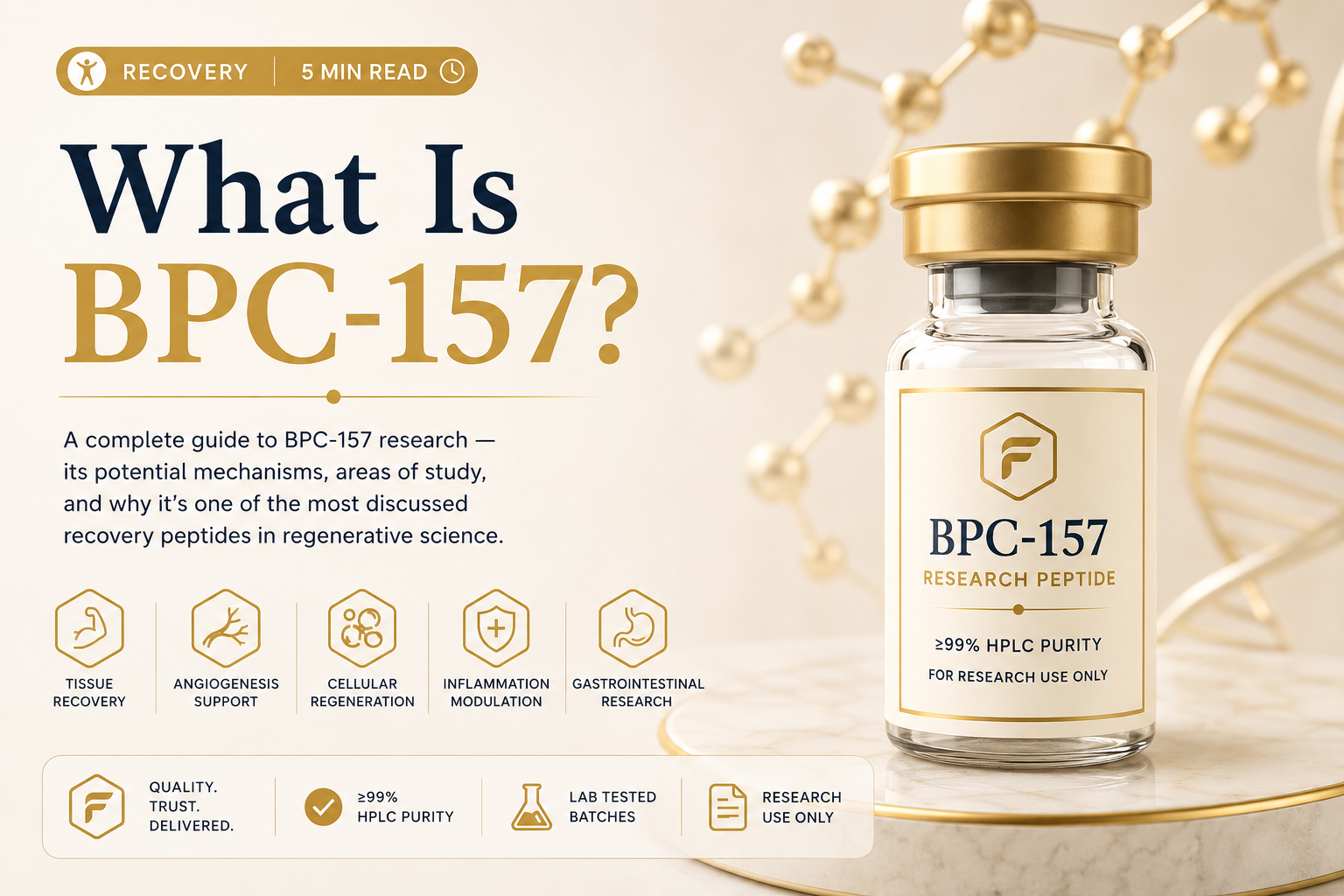
Among the most widely discussed compounds in regenerative peptide research, BPC-157 has become one of the most recognized names in studies involving tissue recovery, cellular repair pathways, and inflammation-related mechanisms.
Researchers continue investigating BPC-157 for its potential role in:
- Tendon and ligament research
- Muscle recovery pathways
- Gastrointestinal tissue studies
- Cellular regeneration signaling
- Recovery-related biological mechanisms
As regenerative peptide science expands, BPC-157 remains one of the most frequently explored compounds in recovery-focused laboratory research. This guide explains what BPC-157 is, why researchers study it, and the biological pathways that continue attracting attention in modern peptide science.
What Is BPC-157?
BPC-157 stands for Body Protection Compound-157. It is a synthetic peptide derived from a naturally occurring protein sequence associated with gastric protective compounds.
In laboratory settings, BPC-157 is studied for its potential involvement in:
- Tissue repair pathways
- Blood vessel formation
- Cellular migration
- Inflammatory modulation
- Recovery signaling mechanisms
Its broad research interest comes from observations suggesting it may interact with multiple regenerative pathways simultaneously.
Why Researchers Are Interested in BPC-157
Regenerative research often focuses on compounds that may influence how tissues respond to stress, injury, and recovery environments. BPC-157 has attracted attention because researchers continue investigating its possible relationship with connective tissue adaptation, recovery signaling, angiogenesis pathways, fibroblast activity, and collagen-related mechanisms.
Unlike many highly targeted peptides, BPC-157 is frequently discussed for its potentially broad regenerative activity across multiple tissue models.
Areas of BPC-157 Research
Tendon & Ligament Research
One of the most common areas of investigation involves:
- Tendon recovery pathways
- Ligament adaptation
- Connective tissue remodeling
- Collagen organization studies
Researchers continue exploring how BPC-157 may influence recovery environments in mechanically stressed tissues.
Muscle Recovery Research
BPC-157 is also frequently studied in models involving:
- Muscle strain recovery
- Cellular repair signaling
- Recovery pathway activation
- Soft tissue adaptation
Interest in muscle-related research is one reason the peptide has become widely discussed in regenerative science communities.
Gastrointestinal Research
Because the peptide originates from gastric-protective protein sequences, researchers also investigate BPC-157 in studies involving:
- Gastrointestinal tissue integrity
- Gut lining pathways
- Cellular protection mechanisms
- Recovery-related digestive models
This remains one of the unique characteristics that differentiates BPC-157 from many other regenerative peptides.
Angiogenesis Research
Another major area of interest involves angiogenesis — the formation of new blood vessels. Researchers study this pathway because improved vascular signaling may influence nutrient delivery, oxygen transport, recovery support, and tissue regeneration environments. BPC-157 continues attracting attention in studies exploring these vascular-related mechanisms.
Potential Mechanisms Being Investigated
Researchers continue studying how BPC-157 may interact with biological systems involving:
- Nitric oxide signaling
- Growth factor activity
- Cellular migration
- Fibroblast response
- Collagen synthesis pathways
- Inflammatory signaling modulation
Although research remains ongoing, these mechanisms are central to why BPC-157 continues receiving attention in regenerative peptide science.
Why BPC-157 Is Commonly Paired With TB-500
In peptide research discussions, BPC-157 is often paired with TB-500 due to their potentially complementary mechanisms.
BPC-157 research focus is often associated with localized tissue pathways, connective tissue signaling, and recovery-site activity. TB-500 research focus is often associated with systemic recovery pathways, cellular migration, and broad tissue remodeling.
Researchers sometimes investigate the combination in models involving multi-layer tissue recovery, tendon and muscle interaction, and recovery optimization pathways. This pairing has become one of the most recognized combinations in regenerative peptide research.
Why Purity Matters in BPC-157 Research
Regenerative peptide studies require high analytical consistency. Low-quality peptide material may contain residual synthesis impurities, degraded peptide fragments, oxidized compounds, or inconsistent concentrations. These issues may interfere with cellular response observations, recovery signaling studies, experimental reproducibility, and stability analysis.
Researchers therefore often prioritize ≥99% HPLC purity, batch-tested compounds, mass spectrometry verification, proper lyophilization, and transparent analytical reporting. You can review every certificate of analysis on our lab reports page.
The Growth of Regenerative Peptide Research
Interest in regenerative peptides continues expanding rapidly. Researchers are increasingly exploring compounds involved in tissue adaptation, cellular signaling, recovery optimization, connective tissue biology, and regenerative mechanisms.
Among recovery-focused compounds, BPC-157 remains one of the most recognized peptides due to its broad research applications and ongoing investigation across multiple biological pathways. As peptide science evolves, analytical transparency and research-grade manufacturing standards are becoming increasingly important for reliable laboratory outcomes.
Final Thoughts
BPC-157 remains one of the most discussed peptides in regenerative and recovery-focused research. Researchers continue studying its potential involvement in tissue repair pathways, connective tissue research, angiogenesis signaling, cellular recovery mechanisms, and gastrointestinal tissue models. Its broad research profile is one reason BPC-157 continues attracting attention in modern peptide science.
As with all research compounds, analytical quality matters. Reliable peptide research begins with verified purity, batch consistency, professional testing, and transparent laboratory standards — because in regenerative research, precision and consistency drive meaningful results.
Disclaimer: Research compounds are intended strictly for in-vitro laboratory and research use only. They are not intended for human consumption, therapeutic use, or diagnostic applications.
RELATED RESEARCH COMPOUNDS
Featured in this article
CONTINUE READING
June 18, 2026
Retatrutide Research Guide: Triple Agonist Compound for RUO Use
A research-use-only technical overview of Retatrutide — naming, identity, the triple agonist mechanism across GLP-1, GIP, and glucagon receptors, and analytical handling notes.
June 14, 2026
Third-Party Testing Explained: Why Janoshik HPLC Certificates Matter
What independent Janoshik HPLC and mass-spec testing actually proves — and how to read a research peptide Certificate of Analysis with confidence.