
METABOLIC · GLP-1
GLP-1 Research Compounds: Tirzepatide vs Retatrutide
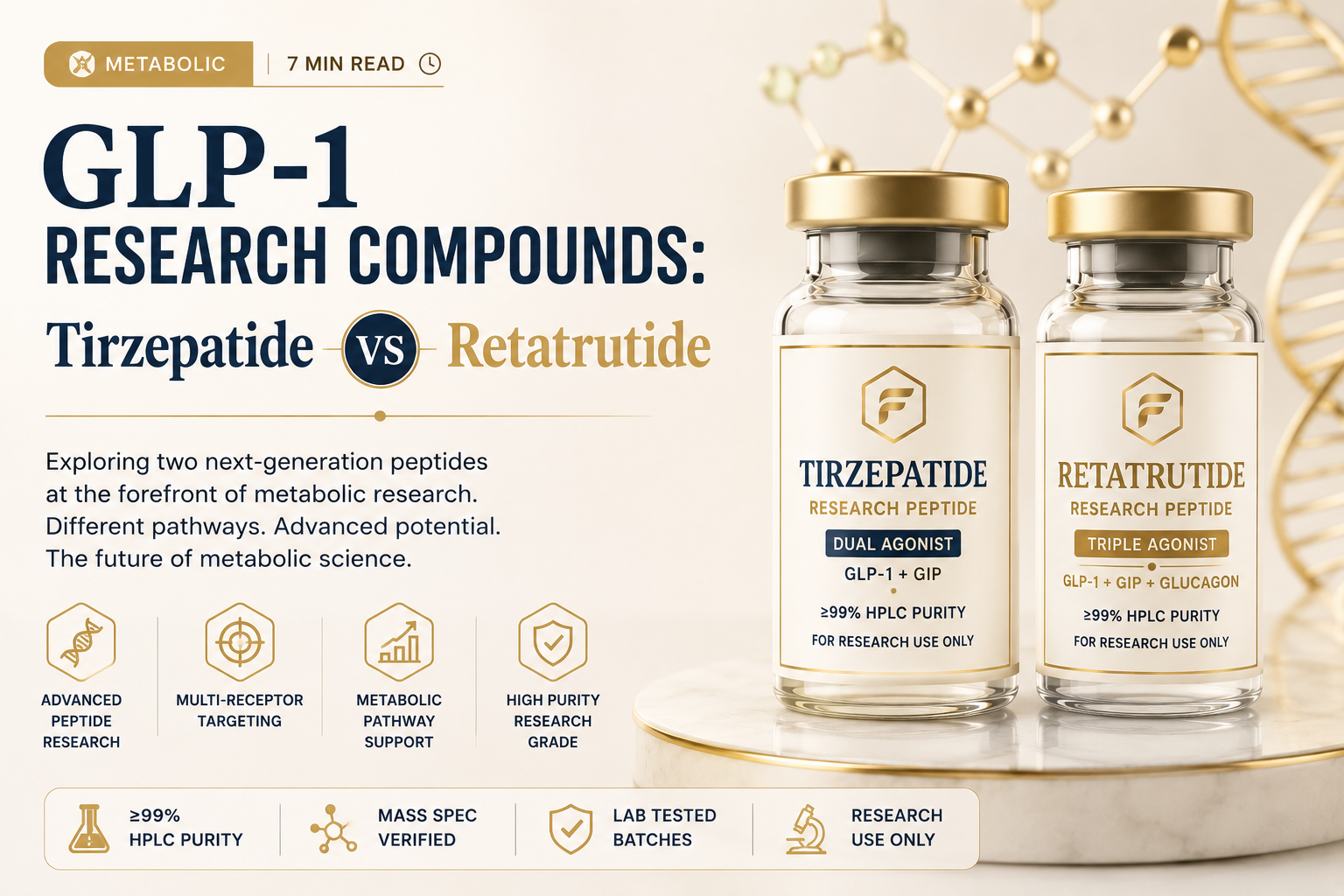
The field of metabolic peptide research is evolving rapidly, with next-generation compounds attracting significant attention for their potential roles in weight regulation, glucose metabolism, appetite signaling, and energy balance studies. Among the most discussed research compounds today are Tirzepatide and Retatrutide.
While both peptides are investigated within the broader category of incretin-based metabolic research, they differ substantially in receptor activity, mechanism complexity, and research focus. This guide explores the key differences between Tirzepatide and Retatrutide, their mechanisms in laboratory research, and why Retatrutide is considered one of the most advanced next-generation metabolic research peptides currently under investigation.
What Are GLP-1 Research Compounds?
GLP-1 research compounds are peptides designed to interact with receptors involved in appetite regulation, insulin signaling, gastric emptying, energy metabolism, and glucose homeostasis. Researchers study these pathways because they play major roles in metabolic disorders, obesity mechanisms, energy expenditure, and fat storage regulation. Over the past several years, incretin-based peptide research has expanded significantly due to promising findings in metabolic signaling studies.
What Is Tirzepatide?
Tirzepatide is a dual-agonist peptide researched for its interaction with both GLP-1 receptors and GIP receptors. Because it targets two metabolic pathways simultaneously, Tirzepatide is often referred to as a dual incretin receptor agonist.
In laboratory research, Tirzepatide has been studied for:
- Appetite regulation pathways
- Insulin-response signaling
- Metabolic efficiency
- Body composition research
- Glucose metabolism studies
Researchers are particularly interested in how combining GLP-1 and GIP activity may influence broader metabolic outcomes compared to single-pathway compounds.
What Is Retatrutide?
Retatrutide is considered a next-generation metabolic research peptide because it expands beyond dual-pathway activity. Retatrutide is investigated as a triple receptor agonist, interacting with GLP-1 receptors, GIP receptors, and glucagon receptors.
This additional glucagon receptor activity is what makes Retatrutide especially significant in advanced metabolic research. Researchers are exploring whether this third mechanism may contribute to:
- Increased energy expenditure
- Enhanced fat metabolism pathways
- Broader metabolic adaptation
- More aggressive body composition changes
Key Difference: Dual vs Triple Agonism
The primary distinction between Tirzepatide and Retatrutide lies in receptor targeting. Tirzepatide targets GLP-1 and GIP, focusing on appetite signaling, glucose regulation, and metabolic efficiency. Retatrutide targets GLP-1, GIP, and glucagon, expanding focus into energy expenditure, fat metabolism pathways, and advanced body composition research. This third glucagon-related pathway is why researchers often view Retatrutide as a more aggressive next-generation metabolic compound.
Why Researchers Are Interested in Glucagon Activity
Traditionally, glucagon has been associated with glucose regulation. However, in metabolic peptide research, glucagon receptor activity is also being explored for its potential involvement in increased caloric expenditure, fat oxidation pathways, thermogenic signaling, and energy utilization. Researchers theorize that combining appetite regulation, insulin signaling, and energy expenditure may create a broader metabolic effect than GLP-1-based activity alone — a concept central to why triple-agonist research continues gaining momentum.
Why Purity Matters in Metabolic Peptide Research
Metabolic peptide studies require high analytical consistency. Low-quality compounds may contain residual synthesis impurities, degraded fragments, oxidized material, or inconsistent concentrations — all of which interfere with receptor signaling studies, reproducibility, and dose-response analysis. Researchers therefore prioritize ≥99% HPLC purity, mass spectrometry verification, batch consistency, sterile lyophilization, and transparent analytical reporting.
The Future of Multi-Receptor Metabolic Research
The evolution from single agonists to dual agonists to triple agonists reflects how rapidly metabolic peptide science is advancing. Compounds like Retatrutide represent the next phase of incretin-based peptide investigation, where researchers are exploring whether broader receptor engagement can unlock more advanced metabolic responses.
Final Thoughts
Tirzepatide and Retatrutide represent two of the most important compounds in modern metabolic peptide research. Tirzepatide focuses on dual receptor activity; Retatrutide expands into triple receptor agonism. For GH-axis research alongside metabolic work, see Tesamorelin, a stabilized GHRH analog frequently referenced in visceral adipose studies.
Disclaimer: Research compounds are intended strictly for in-vitro laboratory and research use only. They are not intended for human consumption, therapeutic use, or diagnostic applications.
RELATED RESEARCH COMPOUNDS
Featured in this article

CONTINUE READING
June 18, 2026
Retatrutide Research Guide: Triple Agonist Compound for RUO Use
A research-use-only technical overview of Retatrutide — naming, identity, the triple agonist mechanism across GLP-1, GIP, and glucagon receptors, and analytical handling notes.
June 14, 2026
Third-Party Testing Explained: Why Janoshik HPLC Certificates Matter
What independent Janoshik HPLC and mass-spec testing actually proves — and how to read a research peptide Certificate of Analysis with confidence.