
NAD+ · CLINICAL EVIDENCE · CANADA
NAD+ Intravenous Research: The Pilot Study and Its Evidence Gaps
Does the published NAD+ infusion pilot prove a wellness benefit? No. Grant and colleagues' 2019 study tracked plasma and urinary metabolites during a six-hour intravenous infusion. Its biochemical findings do not establish improved energy, cognition, addiction outcomes or longevity.
This original FirstLabs editorial review was updated November 5, 2026. It is educational information, not medical advice, a dosing guide or a recommendation for personal use. FirstLabs catalogue materials are for laboratory research only, not human or veterinary use.
What the 2019 pilot study investigated
The paper, published in Frontiers in Aging Neuroscience, examined changes in the human plasma and urine NAD+ metabolome during direct intravenous administration. A metabolome is a set of measured molecules and their metabolic products.
This was a pilot investigation of biochemical handling, not a large randomized trial testing a clinical benefit. Its central question concerned what happened to NAD+ and related metabolites during the observation period. The six-hour observation of administration is a study-design fact, not an instruction for personal use.
The reported plasma and urine findings
The authors reported no change in measured plasma NAD+ or its metabolites until after two hours. Urinary NAD+ and methylnicotinamide increased at six hours.
These findings describe measured concentrations and excretion. They do not prove that NAD+ reached all target tissues, entered every relevant cellular compartment or improved mitochondrial performance. Proposed explanations for early plasma behaviour remain mechanistic interpretations rather than demonstrations of clinical benefit.
A plasma concentration and a patient's functional outcome answer different questions. Quoting a metabolite change as “proof of cellular rejuvenation” would go beyond what this study measured.
What this pilot does not establish
- It does not establish longer life or reversal of aging.
- It does not demonstrate prevention or treatment of dementia, fatigue or addiction.
- It does not establish long-term safety or rule out uncommon harms.
- It does not establish superiority to oral NR or NMN.
- It does not show equivalence between the study formulation and a commercial research vial.
Canadian authorization is separate from a published study
Health Canada's April 9, 2026 public warning lists NAD+ among examples of unauthorized injectable products it had seized. The agency states that unauthorized products have not been assessed for safety, efficacy and quality and advises consumers not to buy or use them.
The notice's grouped product terminology does not make NAD+ chemically a peptide: it remains a coenzyme. A published pilot, a research-only label or an analytical certificate does not provide drug authorization. This review does not characterize any particular FirstLabs vial as an approved injectable medicine.
What stronger evidence would need
A clinical-benefit claim requires a controlled study with a defined formulation, appropriate comparator, prespecified meaningful outcomes, sufficient follow-up and systematic adverse-event reporting. Independent replication matters, particularly when early studies are small.
Laboratory documentation is another separate layer: chemical identity, measured amount, analytical purity and any stock-to-report traceability. These checks do not establish sterility, clinical safety or effectiveness by themselves.
NAD+ infusion evidence: frequently asked questions
Did Grant 2019 measure a proven anti-aging effect?
No. It measured plasma and urinary metabolites during a pilot investigation, not human aging reversal.
Can oral NR and NMN studies fill the direct NAD+ evidence gap?
No. The molecule, route and formulation differ; clinical outcomes cannot simply be transferred between them.
Does an NAD+ certificate mean a vial is approved for injection?
No. Analytical sample results are not drug authorization or evidence of medical suitability.
Laboratory documentation is a separate question
Evidence about direct intravenous NAD+ in a clinical study does not establish that a FirstLabs vial is equivalent to the studied formulation. A certificate of analysis describes the submitted sample, not medical suitability or regulatory authorization. HPLC purity does not by itself establish quantity, sterility, endotoxin control or a match to current stock.
For laboratory records, verify exact identity and labelled size, analytical methods, measured quantity, sample identifiers and any available lot-to-stock documentation. A laboratory task ID is not automatically a manufacturing lot. Keep missing reports and adverse results visible rather than borrowing evidence from another size.
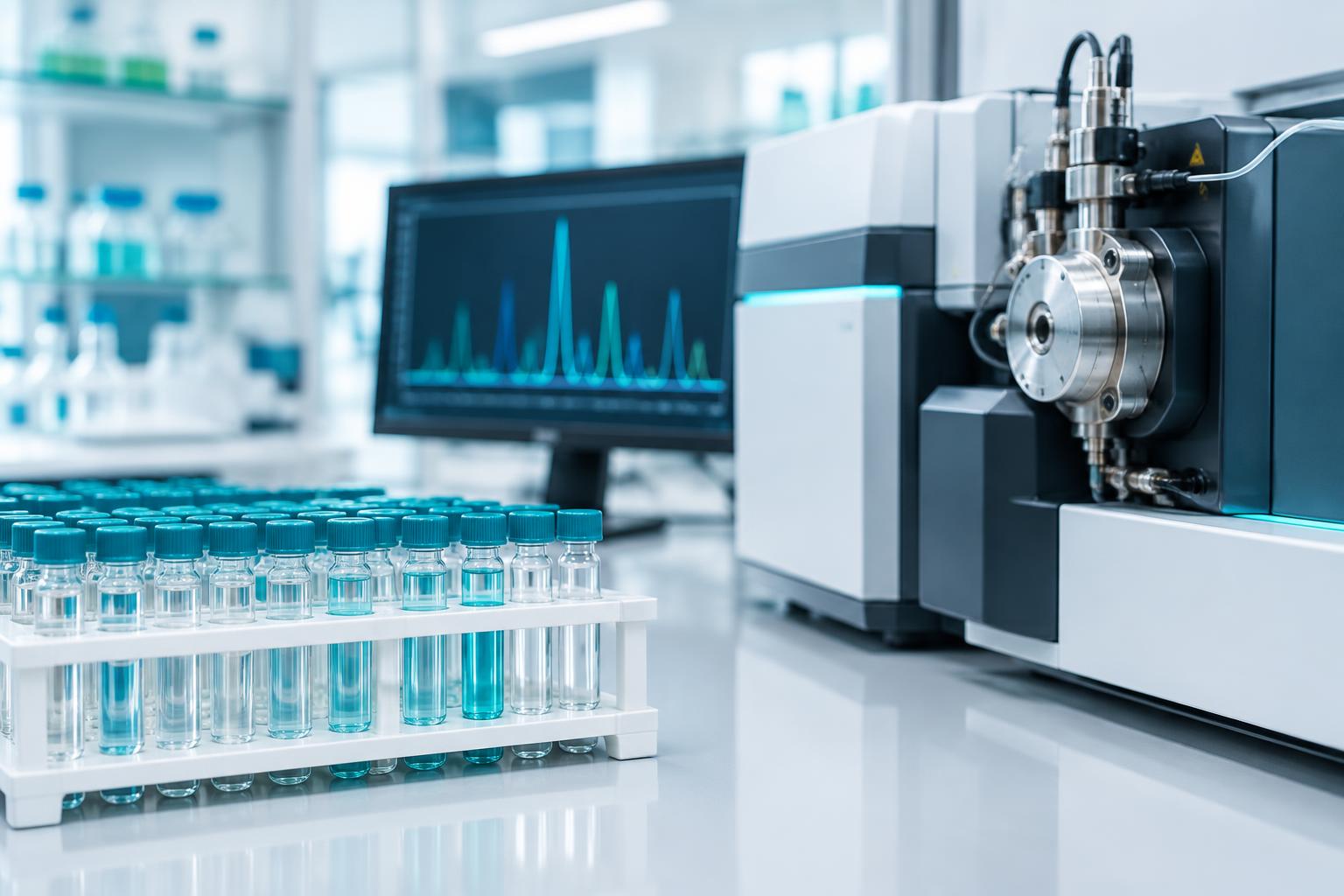
Compare NAD+ with NR and NMN and read the oral NR human-trial review. The NAD+ 500MG catalogue page is for laboratory specifications, not infusion instructions. The cover depicts an illustrative analytical scene, not the pilot study or a FirstLabs facility.
Read our COA verification checklist, published laboratory reports and Canadian regulation overview for these distinctions.
Primary sources and editorial scope
- Grant et al. (2019), Frontiers in Aging Neuroscience: A Pilot Study Investigating Changes in the Human Plasma and Urine NAD+ Metabolome During a 6 Hour Intravenous Infusion of NAD+
- Health Canada (April 9, 2026): Think twice before injecting peptides bought online — unauthorized products can seriously harm your health
FirstLabs is a research-material supplier with a commercial interest in the compounds discussed, not a licensed pharmacy or an independent medical authority. Results belong to their original study populations, formulations and endpoints. No personal outcome, treatment protocol or authorization of catalogue products is implied.
RELATED RESEARCH COMPOUNDS
Featured in this article
CONTINUE READING
November 5, 2026
NAD+ vs NR and NMN: Molecules, Pathways and Research Limits
NAD+ is a coenzyme, not a peptide. Learn how its precursors differ and why the molecule, route and endpoint belong beside every study result.
November 5, 2026
NAD+ Human Research: What the Oral NR Trials Actually Found
Higher NAD-related markers are not proof of better health. Two randomized NR trials show why biochemical changes and clinical outcomes must stay separate.