
NAD+ · COMPARISON · CELLULAR RESEARCH
NAD+ vs NR and NMN: Molecules, Pathways and Research Limits
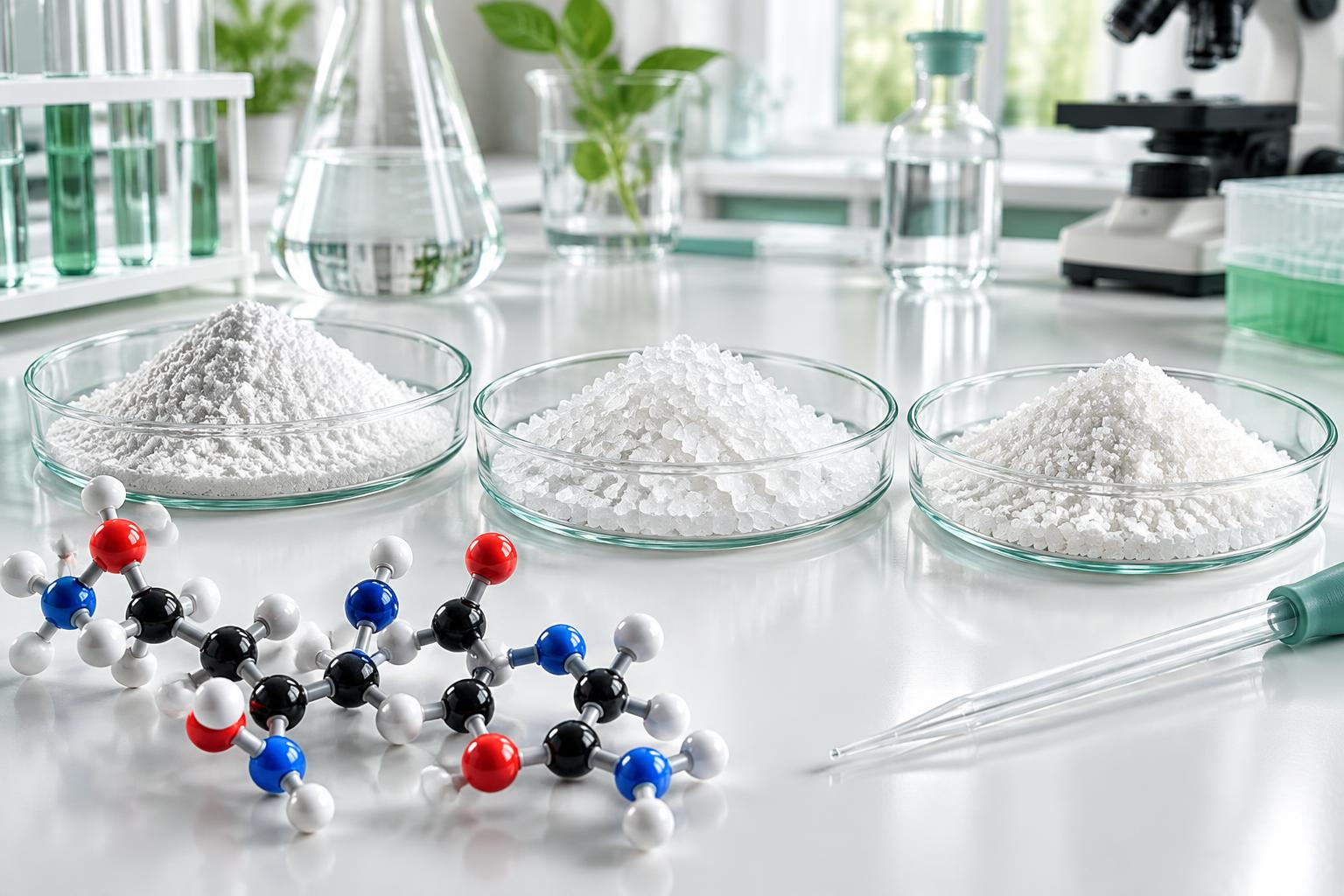
Are NAD+, NR and NMN the same thing? No. NAD+ is a coenzyme; nicotinamide riboside (NR) and nicotinamide mononucleotide (NMN) are related precursor molecules studied for their conversion into NAD+. A result from an oral precursor trial is not proof of the same effect from a direct NAD+ vial or another route.
This original FirstLabs editorial review was updated November 5, 2026. It is educational information, not medical advice, a dosing guide or a recommendation for personal use. FirstLabs catalogue materials are for laboratory research only, not human or veterinary use.
NAD+ is a coenzyme, not a peptide
Nicotinamide adenine dinucleotide participates in oxidation–reduction reactions through the NAD+/NADH pair. It is also consumed by enzymes involved in cellular signalling and DNA damage responses. These biochemical roles explain scientific interest, but they do not establish that giving more of the molecule produces a health benefit.
Unlike a peptide, NAD+ is not a chain of amino acids. Its presence in a peptide supplier's catalogue does not change its chemical classification. NR and NMN are also distinct molecules, not alternate names for NAD+.
Precursor conversion and route matter
Cells maintain NAD+ through interconnected synthesis and recycling pathways. NR can enter pathways leading to NMN and then NAD+. The biological fate of a substance also depends on tissue, metabolism, formulation and administration route.
Comparisons should therefore record the actual substance and route used. Oral NR, oral NMN and direct intravenous NAD+ cannot be pooled as though they were one intervention. Measuring blood NAD+ does not demonstrate delivery to every tissue or improvement in mitochondrial function.
What human precursor studies can tell us
Martens and colleagues studied oral NR in 24 healthy adults aged 55–79 in a randomized crossover trial with six-week treatment periods. NAD+ metabolism increased; physiological findings were preliminary rather than evidence of reversal of aging.
Dollerup and colleagues studied oral NR in 40 sedentary men with obesity over 12 weeks. It did not improve insulin sensitivity or the measured glucose-metabolism outcomes. The difference illustrates why a change in biochemical markers must be separated from a clinical effect.
A 2022 NMN trial in healthy older men reported increased blood NAD+ and exploratory muscle-function findings, with no significant change in body composition. The authors called for larger studies to validate functional effects. This is evidence about NMN in that study, not direct NAD+ or every population.
A better NAD+ study comparison checklist
- Molecule: NAD+, NR or NMN?
- Route and formulation: what was actually studied?
- Population: healthy volunteers or a defined disease group?
- Endpoint: blood metabolites, tissue measurements or meaningful clinical outcomes?
- Design: randomized comparison, crossover study or uncontrolled pilot?
- Limits: duration, sample size, null outcomes, adverse events and replication.
NAD+ versus NR and NMN: common questions
Does a higher blood NAD+ level prove an anti-aging benefit?
No. It is a biochemical measurement, not proof of longer life, dementia prevention or improved day-to-day function.
Is direct NAD+ proven better than precursors?
The studies reviewed here do not establish that ranking. A credible superiority claim would require an appropriate direct comparison with meaningful outcomes.
Can oral precursor trials support claims about research vials?
No. They do not establish the effectiveness, safety or equivalence of a supplier's direct NAD+ materials.
Laboratory documentation is a separate question
Evidence about NAD+ and its precursors in a clinical study does not establish that a FirstLabs vial is equivalent to the studied formulation. A certificate of analysis describes the submitted sample, not medical suitability or regulatory authorization. HPLC purity does not by itself establish quantity, sterility, endotoxin control or a match to current stock.
For laboratory records, verify exact identity and labelled size, analytical methods, measured quantity, sample identifiers and any available lot-to-stock documentation. A laboratory task ID is not automatically a manufacturing lot. Keep missing reports and adverse results visible rather than borrowing evidence from another size.
Continue with human NR trial outcomes, direct NAD+ intravenous evidence limits and the existing NAD+ biology overview. The NAD+ 500MG catalogue record describes laboratory material, not a clinical formulation. The cover is an illustrative scene, not a molecular identity test or trial photograph.
Read our COA verification checklist, published laboratory reports and Canadian regulation overview for these distinctions.
Primary sources and editorial scope
- Martens et al. (2018), Nature Communications: Chronic nicotinamide riboside supplementation is well-tolerated and elevates NAD+ in healthy middle-aged and older adults
- Dollerup et al. (2018), American Journal of Clinical Nutrition: NR trial in men with obesity
- Igarashi et al. (2022), npj Aging: NMN, blood NAD+ and muscle function in healthy older men
FirstLabs is a research-material supplier with a commercial interest in the compounds discussed, not a licensed pharmacy or an independent medical authority. Results belong to their original study populations, formulations and endpoints. No personal outcome, treatment protocol or authorization of catalogue products is implied.
RELATED RESEARCH COMPOUNDS
Featured in this article
CONTINUE READING
November 5, 2026
NAD+ Human Research: What the Oral NR Trials Actually Found
Higher NAD-related markers are not proof of better health. Two randomized NR trials show why biochemical changes and clinical outcomes must stay separate.
November 5, 2026
NAD+ Intravenous Research: The Pilot Study and Its Evidence Gaps
A metabolome pilot is not a wellness-benefit trial. Separate measured NAD+ handling from energy, cognition, longevity and authorization claims.