
LONGEVITY · CELLULAR
NAD+ Cellular Energy & Longevity Research
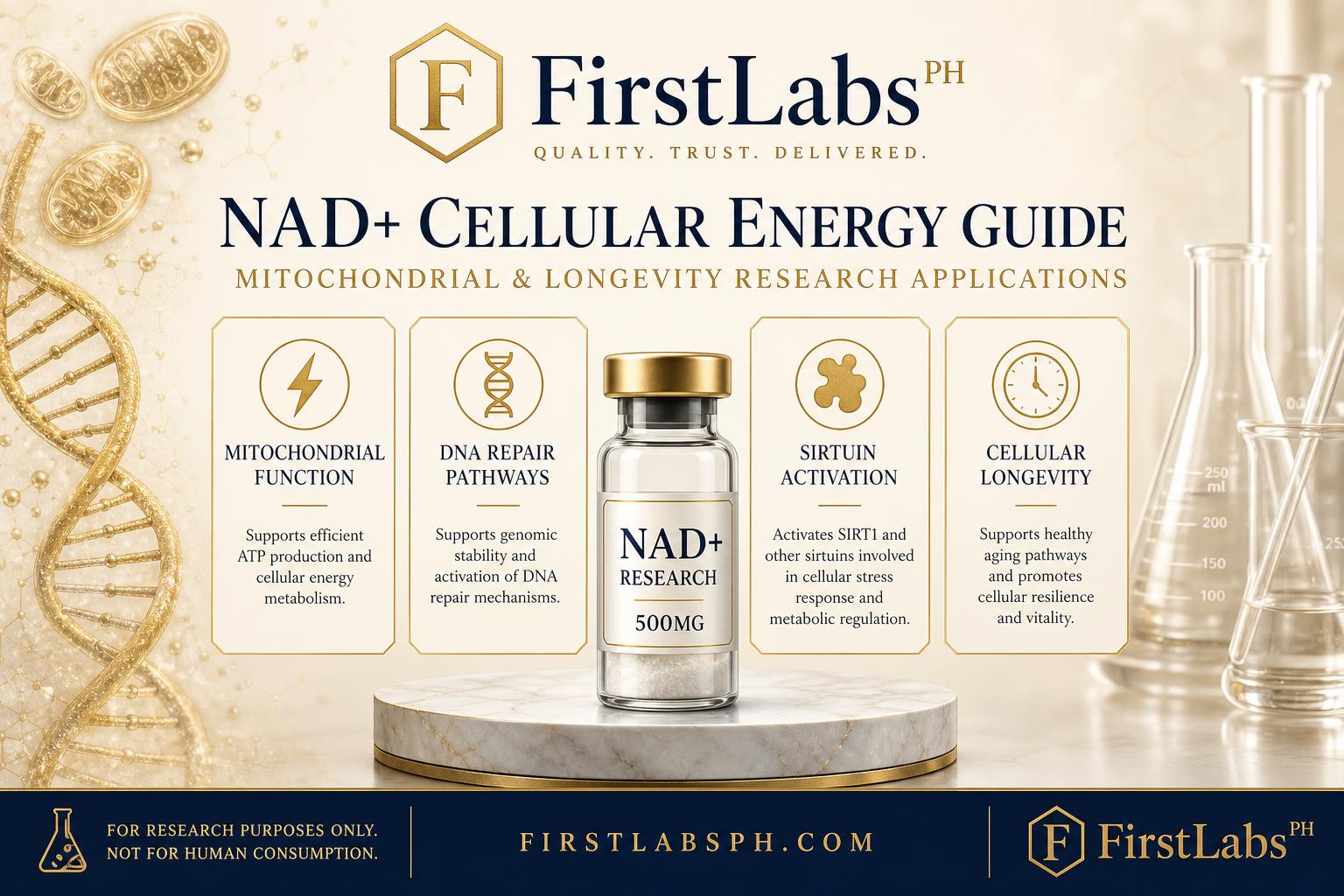
NAD+ (nicotinamide adenine dinucleotide) is one of the most fundamental coenzymes in biology. It sits at the intersection of mitochondrial energy production, DNA repair, and sirtuin-driven longevity signaling — which is why NAD+ has become one of the most discussed molecules in modern cellular and longevity research.
What Is NAD+?
NAD+ is a coenzyme found in every living cell. It cycles between its oxidized form (NAD+) and reduced form (NADH), transferring electrons in the redox reactions that power ATP production. Beyond energy, NAD+ is a required cofactor for sirtuins and PARPs — enzymes central to longevity and DNA repair research.
Why NAD+ Levels Matter
Cellular NAD+ levels decline with age. That decline is correlated in research with reduced mitochondrial efficiency, slower DNA repair, and decreased sirtuin activity — a combination that has made NAD+ restoration one of the most active areas of longevity science.
Key Areas of NAD+ Research
Mitochondrial Function
NAD+ is required for the electron transport chain. Adequate NAD+ supports efficient ATP production and cellular energy metabolism in research models.
DNA Repair Pathways
PARP enzymes consume NAD+ during DNA damage response. Maintaining NAD+ pools is studied for its role in supporting genomic stability under stress.
Sirtuin Activation
Sirtuins (SIRT1–SIRT7) are NAD+-dependent enzymes implicated in stress response, metabolic regulation, and aging research. No NAD+ → no sirtuin activity.
Cellular Longevity
Together, mitochondrial efficiency, DNA repair capacity, and sirtuin activity form the core of why NAD+ is so central to longevity-focused research.
NAD+ Precursors vs Direct NAD+
Most NAD+ research uses either direct NAD+ or precursors like NMN and NR. Direct NAD+ research peptides offer the parent molecule itself, while precursors are studied for their conversion pathway into NAD+ inside cells. Both approaches appear throughout the literature.
NAD+ in Combination Research
NAD+ is frequently paired with longevity peptides like Epitalon in longevity protocols, where the focus is on combining cellular energy support with telomere- and pineal-related signaling.
Storage and Handling
NAD+ is sensitive to heat and light. Keep lyophilized NAD+ frozen, reconstituted NAD+ refrigerated, and protect both from prolonged light exposure. Stability protocols matter as much as purity in longevity research.
Verified Quality
Every First Labs PH NAD+ batch is third-party tested for purity and identity. View the certificates on our lab reports page.
Important Notice: All products offered by First Labs PH are intended for laboratory and research purposes only. Not for human consumption.
RELATED RESEARCH COMPOUNDS
Featured in this article
CONTINUE READING
June 18, 2026
Retatrutide Research Guide: Triple Agonist Compound for RUO Use
A research-use-only technical overview of Retatrutide — naming, identity, the triple agonist mechanism across GLP-1, GIP, and glucagon receptors, and analytical handling notes.
June 14, 2026
Third-Party Testing Explained: Why Janoshik HPLC Certificates Matter
What independent Janoshik HPLC and mass-spec testing actually proves — and how to read a research peptide Certificate of Analysis with confidence.