
COGNITIVE · RESEARCH
Semax vs Selank: Comparing Two Powerful Neuropeptides
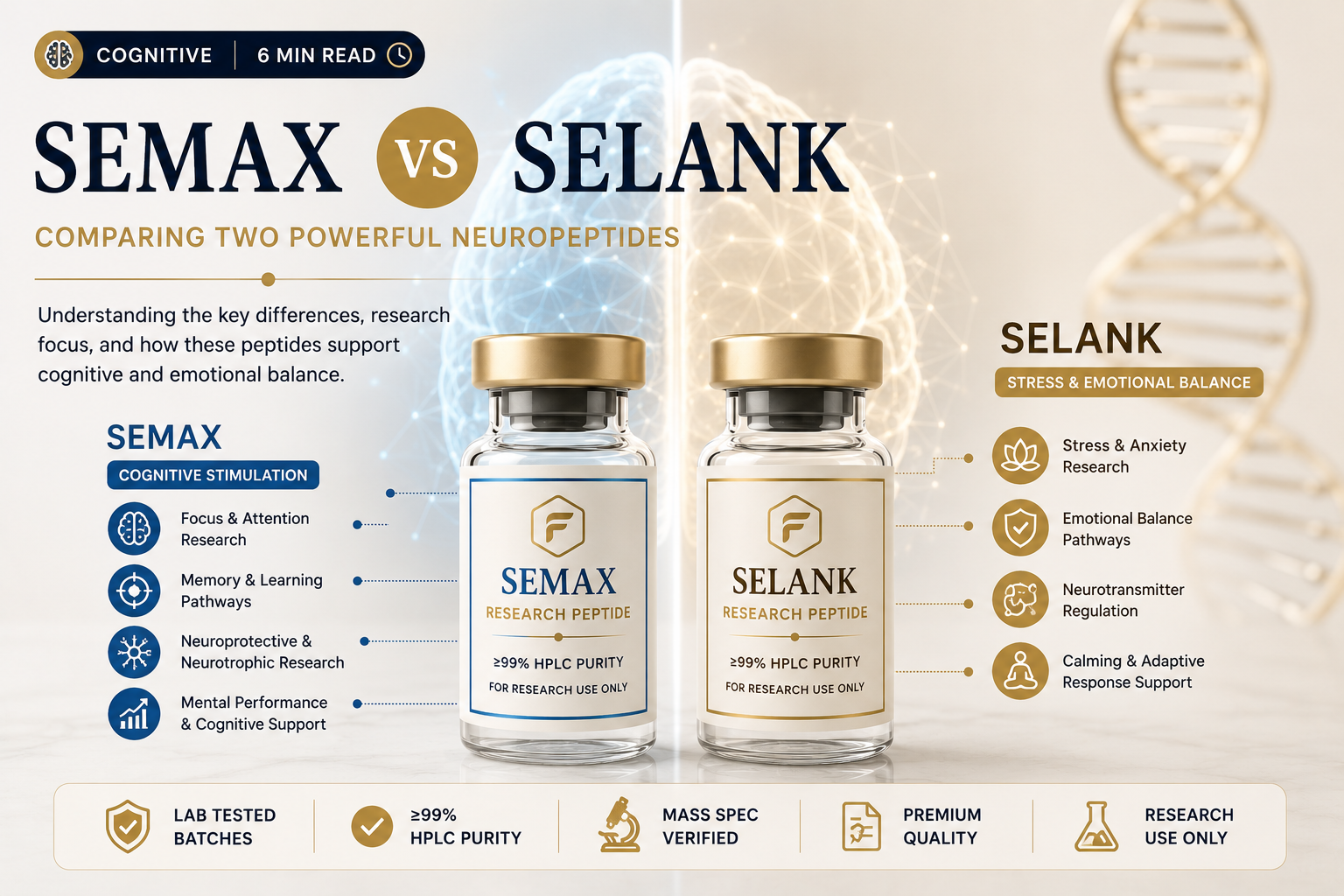
As interest in cognitive peptide research continues growing, two compounds are consistently discussed together in nootropic and neuropeptide studies: Semax and Selank.
Both peptides are investigated in research involving:
- Cognitive signaling pathways
- Stress-response mechanisms
- Neurotransmitter activity
- Neuroprotective research
- Behavioral and neurological models
Although Semax and Selank are often grouped together, researchers study them for very different reasons.
Semax is commonly associated with cognitive stimulation pathways, focus and mental performance research, and neurotrophic signaling.
Selank is more frequently investigated in studies involving stress-response modulation, anxiety-related pathways, and emotional regulation mechanisms.
This guide explores the differences between Semax and Selank, how researchers investigate them, and why both remain highly discussed in modern neuropeptide science.
What Is Semax?
Semax is a synthetic peptide derived from fragments associated with adrenocorticotropic hormone (ACTH)-related research. In laboratory settings, Semax is investigated for its potential involvement in:
- Cognitive performance pathways
- Memory-related signaling
- Neuroprotective mechanisms
- Attention and focus research
- Neurotrophic activity
Researchers continue exploring how Semax may interact with pathways connected to brain-derived neurotrophic factor (BDNF), dopamine signaling, neurotransmitter regulation, and cognitive adaptation mechanisms. Because of its stimulating research profile, Semax is commonly discussed in nootropic-focused peptide science.
What Is Selank?
Selank is another synthetic neuropeptide investigated for its relationship with stress-response pathways, anxiety-related signaling, neurotransmitter balance, and behavioral regulation mechanisms.
Unlike Semax, Selank research is often associated with:
- Calming pathways
- Emotional stability models
- GABA-related signaling
- Stress modulation research
Researchers continue studying Selank for its possible influence on serotonin pathways, dopamine balance, GABA activity, and immune-related signaling mechanisms. Its calming research profile is one reason Selank is frequently paired with Semax in cognitive peptide discussions.
The Core Difference Between Semax and Selank
Although both compounds are investigated in neurocognitive research, their research focus differs significantly.
Semax research focus: cognitive stimulation, attention pathways, focus-related signaling, mental performance research, and neurotrophic mechanisms. Semax is often viewed as the more stimulating cognitive peptide.
Selank research focus: stress modulation, anxiety-related pathways, emotional regulation, behavioral balance, and calming neurotransmitter signaling. Selank is often viewed as the more calming neuroregulatory peptide.
Why Researchers Compare Them
Semax and Selank are frequently compared because researchers are interested in how cognitive stimulation and stress regulation may interact together. Researchers sometimes investigate these peptides in combination models focused on cognitive balance, focus under stress, neurotransmitter regulation, and behavioral adaptation pathways. Their complementary research profiles are one reason both compounds remain highly discussed within nootropic peptide science.
Areas of Semax Research
Semax research commonly focuses on:
- Cognitive signaling pathways
- Memory-related studies
- Neuroprotective activity
- Attention and concentration models
- Neuroplasticity-related mechanisms
Researchers continue investigating how Semax may interact with pathways associated with BDNF expression, dopamine regulation, cognitive adaptability, and brain signaling efficiency.
Areas of Selank Research
Selank research is more commonly associated with:
- Stress-response mechanisms
- Anxiety-related pathways
- Emotional regulation studies
- Behavioral modulation
- Neurotransmitter balance research
Researchers are particularly interested in its possible relationship with GABA pathways, serotonin signaling, immune-neurological interaction, and stress adaptation mechanisms.
Why Neuroprotective Research Matters
Modern neuroscience research increasingly focuses on neuroplasticity, neuroprotection, cognitive adaptation, and brain signaling pathways. Researchers continue exploring peptides that may influence neuronal communication, neurotransmitter systems, stress-response biology, and cognitive resilience. Semax and Selank remain important subjects within this growing field of neuropeptide research.
Why Purity Matters in Cognitive Peptide Research
Neuropeptide studies require high analytical precision. Low-quality compounds may contain residual synthesis impurities, degraded peptide fragments, oxidized material, or inconsistent concentrations. These variables may interfere with neurotransmitter studies, cognitive signaling observations, behavioral pathway analysis, and experimental reproducibility.
Researchers therefore often prioritize:
- ≥99% HPLC purity
- Mass spectrometry verification
- Batch consistency
- Sterile lyophilization
- Transparent analytical reporting
In advanced neurocognitive research, consistency is essential for reliable results. You can review every certificate of analysis on our lab reports page.
The Future of Cognitive Peptide Research
Interest in neuropeptides continues expanding rapidly. Researchers are increasingly exploring compounds involved in cognitive performance, neurotransmitter regulation, stress adaptation, neuroplasticity, and brain signaling pathways. Semax and Selank remain two of the most recognized compounds within this field due to their differing but complementary research profiles.
As peptide science evolves, cognitive research continues moving toward more advanced investigations involving multi-pathway neuroregulation, brain signaling optimization, neuroprotective mechanisms, and behavioral adaptation systems.
Final Thoughts
Semax and Selank remain two of the most discussed peptides in cognitive and neuroregulatory research. While both are investigated within neuropeptide science, their primary research focus differs — Semax is commonly associated with cognitive stimulation pathways, and Selank is more commonly associated with calming and stress-regulation pathways.
As with all research compounds, analytical quality matters. Reliable neuropeptide research begins with verified purity, professional testing, batch consistency, and transparent laboratory standards — because in cognitive peptide science, precision and consistency remain critical.
Disclaimer: Research compounds are intended strictly for in-vitro laboratory and research use only. They are not intended for human consumption, therapeutic use, or diagnostic applications.
RELATED RESEARCH COMPOUNDS
Featured in this article
CONTINUE READING
June 18, 2026
Retatrutide Research Guide: Triple Agonist Compound for RUO Use
A research-use-only technical overview of Retatrutide — naming, identity, the triple agonist mechanism across GLP-1, GIP, and glucagon receptors, and analytical handling notes.
June 14, 2026
Third-Party Testing Explained: Why Janoshik HPLC Certificates Matter
What independent Janoshik HPLC and mass-spec testing actually proves — and how to read a research peptide Certificate of Analysis with confidence.