
LAB SAFETY · RESEARCH · CANADA
Research Peptide Lab Safety: Handling, PPE and Disposal in Canada
Research peptides are biologically active materials, and they belong in a laboratory workflow — not a kitchen, bathroom or gym bag. This overview covers the safety basics Canadian laboratories apply when handling, storing and disposing of research peptides. It is general information; your institution's procedures and each material's safety data sheet (SDS) always take precedence.
Start with the documents, not the vial
Before handling any research material, review its SDS where one exists, plus the supplier's handling and storage documentation. Record what is known — identity, form, quantity — and what is not. A certificate of analysis answers analytical questions; it is not a safety data sheet and does not describe toxicity or exposure limits.
Keep the receiving record, label and report together so that anyone handling the material later can trace what it is. Our batch traceability guide covers that record-keeping in detail.
Personal protective equipment and ventilation
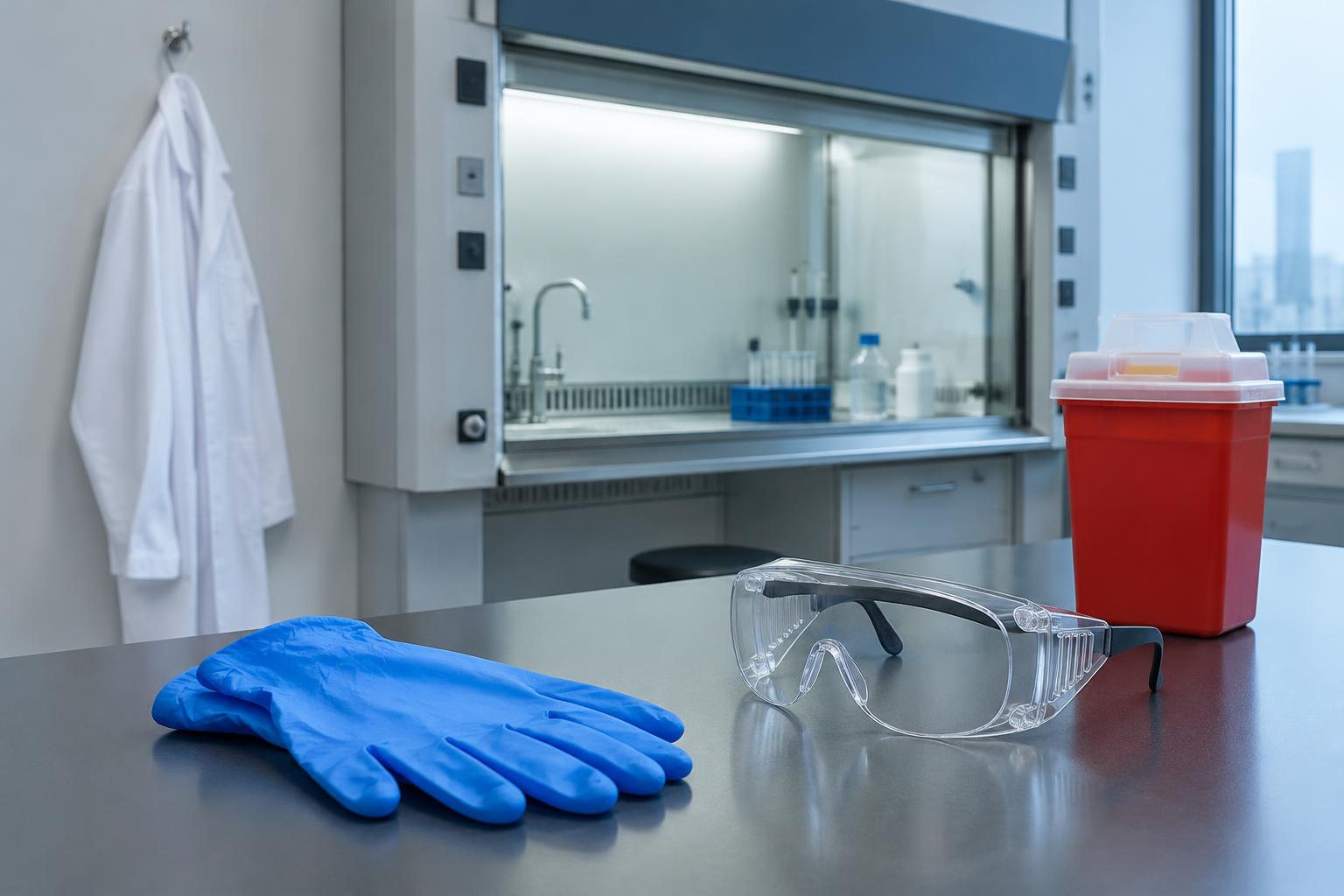
Baseline PPE for handling lyophilized or reconstituted research peptides is nitrile gloves, eye protection and a lab coat. Weighing and reconstitution steps that can generate aerosols or dust belong in a fume hood or ventilated enclosure. Treat every research peptide as biologically active even when its effects are poorly characterized — “research use only” means the safety profile is not established, not that it is benign.
Sharps and reconstitution equipment
Laboratory reconstitution uses needles and syringes, which makes sharps handling part of peptide work. Needles go directly into an approved sharps container — never recapped by hand, never in regular garbage. Full sharps containers are disposed of through the laboratory's biomedical or hazardous waste stream, following provincial and municipal rules.
For the reconstitution process itself, see our laboratory reconstitution guide; for storage conditions, the storage and stability guide.
Spills, exposure and disposal
- Clean small spills with absorbent material while wearing gloves, and dispose of cleanup materials as chemical waste.
- For skin or eye contact, flush with water and follow the SDS first-aid measures and your institution's incident procedure.
- Unused or expired material goes through the chemical waste stream — never down the drain and never in household garbage.
- Document incidents and disposals so the material's record stays complete.
The Canadian context: WHMIS and provincial rules
Canadian workplaces that handle hazardous products operate under WHMIS — the Workplace Hazardous Materials Information System — which requires labels, safety data sheets and worker education. Research laboratories typically apply WHMIS-aligned procedures even for small quantities. Disposal rules for chemical and biomedical waste are set provincially and municipally, so the correct stream depends on where the laboratory operates.
If you are not working within an institutional laboratory, the honest guidance is that these materials are not intended for you: FirstLabs products are for laboratory research only, not human consumption, and no article on this site provides personal-use or dosing instructions.
A short safety checklist
- SDS and supplier documentation reviewed before first handling.
- Gloves, eye protection and lab coat on; ventilation or fume hood for open handling.
- Sharps container within reach before any needle work begins.
- Waste stream identified before the experiment, not after.
- Receiving record, label and report filed together.
The cover is an illustrative laboratory image, not a FirstLabs facility photograph. General safety information only — institutional procedures and safety data sheets take precedence.
CONTINUE READING
October 23, 2026
Are Peptides Legal in Canada? What Research Use Actually Means
Health Canada regulates injectable peptides as prescription drugs. Here is what that means for research materials, and what a research-use label does not change.
October 23, 2026
Are Peptides Safe? What Research Evidence Can and Cannot Show
“Safe” is a claim that needs evidence. What clinical trials, animal studies and purity reports each can — and cannot — tell you about a peptide.