
CLINICAL EVIDENCE · GROWTH HORMONE · TESAMORELIN
Tesamorelin and Cognition: The Older-Adult GHRH Trial Explained
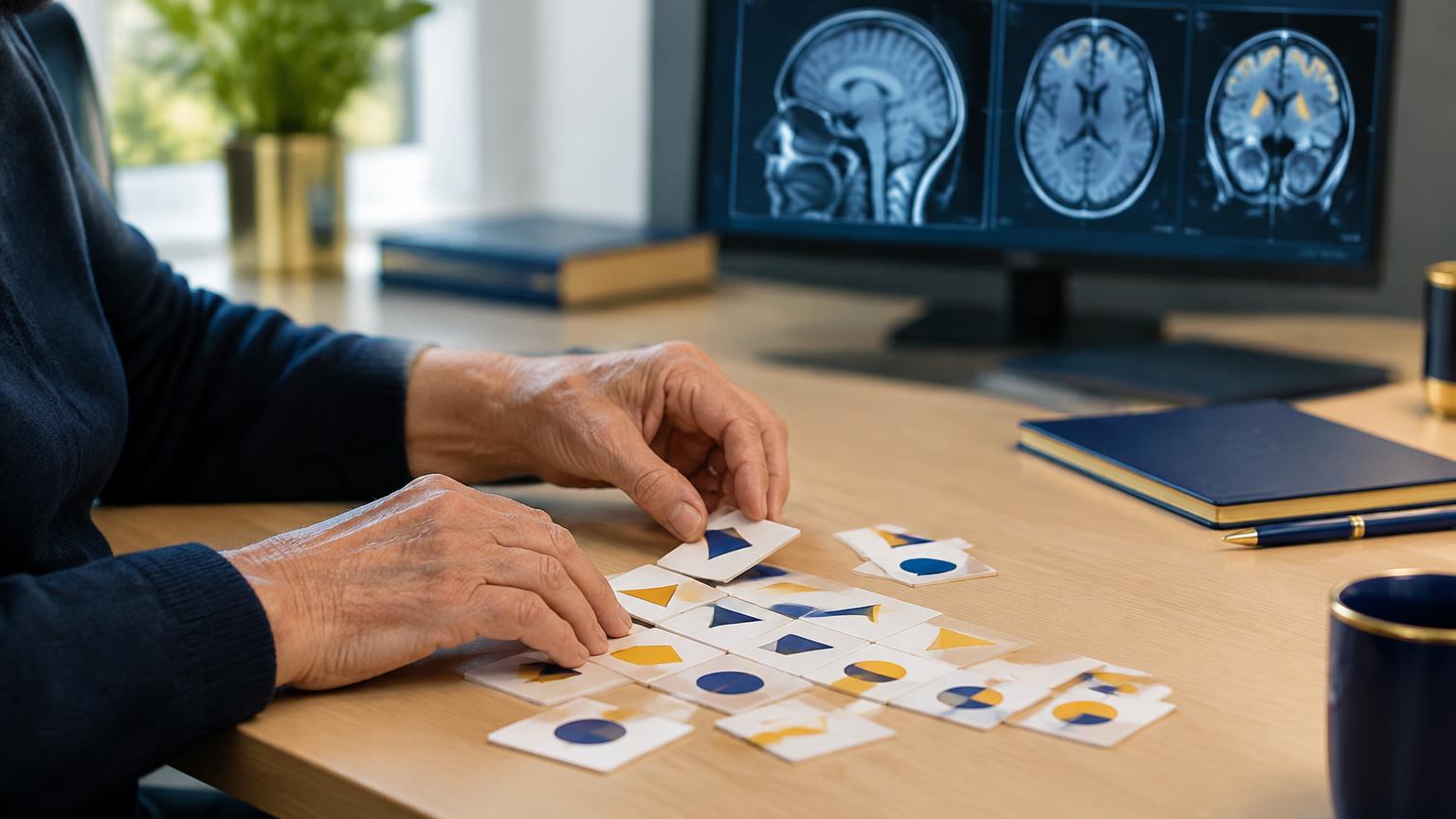
Has tesamorelin been studied for memory or brain ageing? One frequently cited randomized trial tested it in older adults with and without mild cognitive impairment (MCI). The trial found a modest effect on cognitive test scores. It did not show prevention or treatment of dementia.
This original FirstLabs editorial review was updated November 3, 2026. It is educational information, not medical advice, a dosing guide or a recommendation for personal use. FirstLabs catalogue materials are for laboratory research only, not human or veterinary use.
Why GHRH was studied in ageing
Growth hormone-releasing hormone (GHRH), growth hormone and insulin-like growth factor 1 (IGF-1) all decline with age and affect the brain. University of Washington researchers had earlier reported short-term cognitive effects of GHRH in healthy older adults. They then ran a larger trial using tesamorelin, a stabilized GHRH analogue.
The 2012 Archives of Neurology trial
Baker and colleagues enrolled 152 adults aged 55 to 87 (mean age 68), including 66 with MCI. Participants received tesamorelin or placebo for 20 weeks, followed by a 10-week washout; 137 completed the study.
The researchers tested executive function, verbal memory and visual memory with standard cognitive tasks such as Stroop colour-word interference, task switching and story recall.
Reported results
- The intention-to-treat analysis showed a favourable overall effect on cognition (P=.03), similar in the MCI and healthy groups.
- The clearest signal was executive function (P=.005). Verbal memory showed a trend that did not reach significance (P=.08).
- IGF-1 rose by 117% but stayed in the physiological range. Percentage body fat fell by 7.4%.
- Fasting insulin rose by 35% in adults with MCI.
- Mild adverse events were reported by 68% of tesamorelin-treated participants versus 36% of placebo participants.
How to read these findings carefully
A statistically significant change in a test-score composite is not the same as a noticeable everyday improvement, slower dementia progression or protection against Alzheimer disease. The trial was 20 weeks long and was not designed to measure those outcomes.
The authors called for longer trials. Higher adverse-event rates and the insulin rise are part of the evidence, not footnotes. Headlines describing tesamorelin as a “brain” or “nootropic” peptide go beyond what this study showed.
Regulatory status
No regulator has authorized tesamorelin for cognitive impairment, memory or brain ageing. The U.S. Egrifta SV label is limited to excess abdominal fat in adults with HIV and lipodystrophy. In Canada, the Drug Product Database lists the Egrifta record as Cancelled Pre Market. Research vials carry no therapeutic authorization.
Tesamorelin and cognition: frequently asked questions
Does tesamorelin improve memory?
The main trial found a significant effect on executive function and only a non-significant trend for verbal memory.
Is tesamorelin a dementia treatment?
No. It has not been shown to prevent or treat dementia, and it is not authorized for that use.
Were the participants young adults?
No. They were adults aged 55 to 87, with or without MCI.
Laboratory documentation is a separate question
Evidence about tesamorelin in a clinical study does not establish that a FirstLabs vial is equivalent to the studied formulation. A certificate of analysis describes the submitted sample, not medical suitability or regulatory authorization. HPLC purity does not by itself establish quantity, sterility, endotoxin control or a match to current stock.
For laboratory records, verify exact identity and labelled size, analytical methods, measured quantity, sample identifiers and any available lot-to-stock documentation. A laboratory task ID is not automatically a manufacturing lot. Keep missing reports and adverse results visible rather than borrowing evidence from another size.
Related reading: Tesamorelin visceral-fat evidence and Tesamorelin liver-fat research. The Tesamorelin 10mg research catalogue entry is for laboratory research only. The cover is an illustrative scene, not a trial participant.
Read our COA verification checklist, published laboratory reports and Canadian regulation overview for these distinctions.
Primary sources and editorial scope
- Baker et al. (2012), Archives of Neurology: GHRH and cognitive function in MCI and healthy older adults
- ClinicalTrials.gov: NCT00257712
- U.S. FDA: Egrifta SV prescribing information (2024)
- Health Canada: Egrifta Drug Product Database status
FirstLabs is a research-material supplier with a commercial interest in the compounds discussed, not a licensed pharmacy or an independent medical authority. Results belong to their original study populations, formulations and endpoints. No personal outcome, treatment protocol or authorization of catalogue products is implied.
RELATED RESEARCH COMPOUNDS
Featured in this article
CONTINUE READING
November 3, 2026
Tesamorelin Research in Canada: Visceral Fat Evidence and Limits
What the 15.2% visceral-fat result measured, why it is not body-weight loss, and how historical prescription authorization differs from research vials.
November 4, 2026
Tesamorelin and Liver Fat: What the HIV NAFLD Trials Found
Two randomized trials in adults with HIV measured liver fat. Here is what changed, what did not, and why it is not a fatty-liver treatment claim.