
CLINICAL EVIDENCE · GROWTH HORMONE · TESAMORELIN
Tesamorelin and Liver Fat: What the HIV NAFLD Trials Found
Has tesamorelin been studied for liver fat? Yes, in two randomized, placebo-controlled trials of adults living with HIV. Both measured liver fat with imaging or spectroscopy, and the results are limited to those populations. This review explains what was measured, what changed and what the trials could not show.
This original FirstLabs editorial review was updated November 3, 2026. It is educational information, not medical advice, a dosing guide or a recommendation for personal use. FirstLabs catalogue materials are for laboratory research only, not human or veterinary use.
Why researchers looked at liver fat
Tesamorelin's best-known evidence concerns visceral adipose tissue, the fat inside the abdominal cavity. Visceral fat is associated with fat stored in other organs, including the liver. Researchers therefore asked whether a growth hormone-releasing hormone (GHRH) analogue that lowered visceral fat would also change liver fat.
Non-alcoholic fatty liver disease (NAFLD) is common in people with HIV. A study in this group does not automatically apply to fatty liver disease in the general population.
2014 JAMA trial: 50 participants over 6 months
Stanley and colleagues randomized 50 antiretroviral-treated adults with HIV and abdominal fat accumulation to tesamorelin or placebo for six months; 48 received study drug. Visceral fat changed by a mean −34 cm² with tesamorelin versus +8 cm² with placebo.
Liver fat, measured as lipid-to-water percentage, changed by a median −2.0% with tesamorelin versus +0.9% with placebo, a net effect of −2.9 percentage points. Fasting glucose rose briefly at two weeks, but the overall glucose changes at six months did not differ significantly between groups.
This was a small, single-centre trial. It measured imaging endpoints, not liver-related clinical outcomes such as cirrhosis or survival.
2019 Lancet HIV trial: NAFLD and fibrosis signals
A larger multicentre trial enrolled 61 adults with HIV and a hepatic fat fraction of at least 5% by proton magnetic resonance spectroscopy. Participants received tesamorelin or an identical placebo for 12 months, followed by an open-label phase.
Tesamorelin produced an absolute hepatic-fat-fraction effect of −4.1% compared with placebo, a 37% relative reduction from baseline. After 12 months, 35% of the tesamorelin group and 4% of the placebo group had a hepatic fat fraction below 5%. Fasting glucose and HbA1c changes did not differ between groups; injection-site complaints were more common with tesamorelin.
The authors concluded that tesamorelin might be beneficial in this population and that longer studies of liver histology are needed. That is a cautious conclusion, not proof of a treatment for fatty liver disease.
What these trials do not establish
- They studied people with HIV, not the general population with fatty liver.
- Liver-fat percentage is an imaging measure; it is not the same as preventing liver failure or other clinical events.
- Neither trial shows that a research-grade vial matches the studied pharmaceutical formulation.
- No Canadian authorization for a liver indication is implied.
The U.S. Egrifta SV label remains limited to reduction of excess abdominal fat in adults with HIV and lipodystrophy. It is not indicated for weight loss or liver disease.
Tesamorelin and liver fat: frequently asked questions
Does tesamorelin treat fatty liver disease?
No approved indication exists for that use. Two trials in adults with HIV showed reductions in measured liver fat, and the investigators called for longer studies.
Was the liver-fat change the same as weight loss?
No. The trials measured fat in specific tissues using imaging, not total body weight.
Do these results apply to FirstLabs research vials?
No. Clinical results belong to the trial formulation and population. FirstLabs material is sold only for laboratory research.
Laboratory documentation is a separate question
Evidence about tesamorelin in a clinical study does not establish that a FirstLabs vial is equivalent to the studied formulation. A certificate of analysis describes the submitted sample, not medical suitability or regulatory authorization. HPLC purity does not by itself establish quantity, sterility, endotoxin control or a match to current stock.
For laboratory records, verify exact identity and labelled size, analytical methods, measured quantity, sample identifiers and any available lot-to-stock documentation. A laboratory task ID is not automatically a manufacturing lot. Keep missing reports and adverse results visible rather than borrowing evidence from another size.
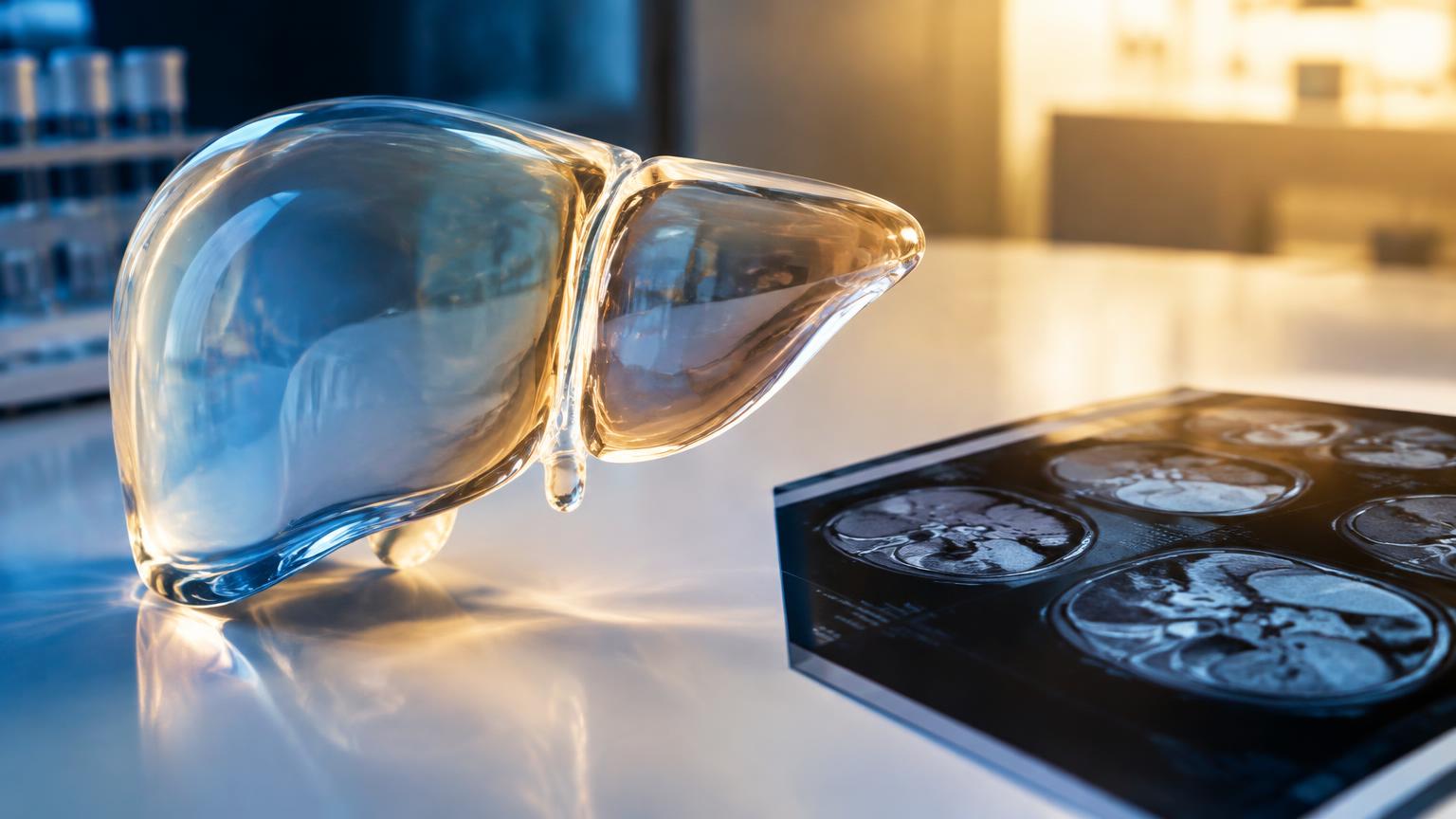
For the original visceral-fat trials and Canadian product status, read Tesamorelin Research in Canada. The Tesamorelin 10mg research catalogue entry lists a laboratory quantity, not a clinical dose. The cover is an illustrative glass model, not an actual trial scan.
Read our COA verification checklist, published laboratory reports and Canadian regulation overview for these distinctions.
Primary sources and editorial scope
- Stanley et al. (2014), JAMA: Tesamorelin, visceral fat and liver fat in HIV
- Stanley et al. (2019), Lancet HIV: Tesamorelin and NAFLD in HIV
- U.S. FDA: Egrifta SV prescribing information (2024)
FirstLabs is a research-material supplier with a commercial interest in the compounds discussed, not a licensed pharmacy or an independent medical authority. Results belong to their original study populations, formulations and endpoints. No personal outcome, treatment protocol or authorization of catalogue products is implied.
RELATED RESEARCH COMPOUNDS
Featured in this article
CONTINUE READING
November 3, 2026
Tesamorelin Research in Canada: Visceral Fat Evidence and Limits
What the 15.2% visceral-fat result measured, why it is not body-weight loss, and how historical prescription authorization differs from research vials.
November 4, 2026
Tesamorelin and Cognition: The Older-Adult GHRH Trial Explained
A 20-week randomized trial reported a modest executive-function effect. Here is what it measured and why it is not a dementia claim.