
CLINICAL EVIDENCE · METABOLIC RESEARCH · TIRZEPATIDE
Tirzepatide and Heart Failure: SUMMIT Trial in HFpEF Explained
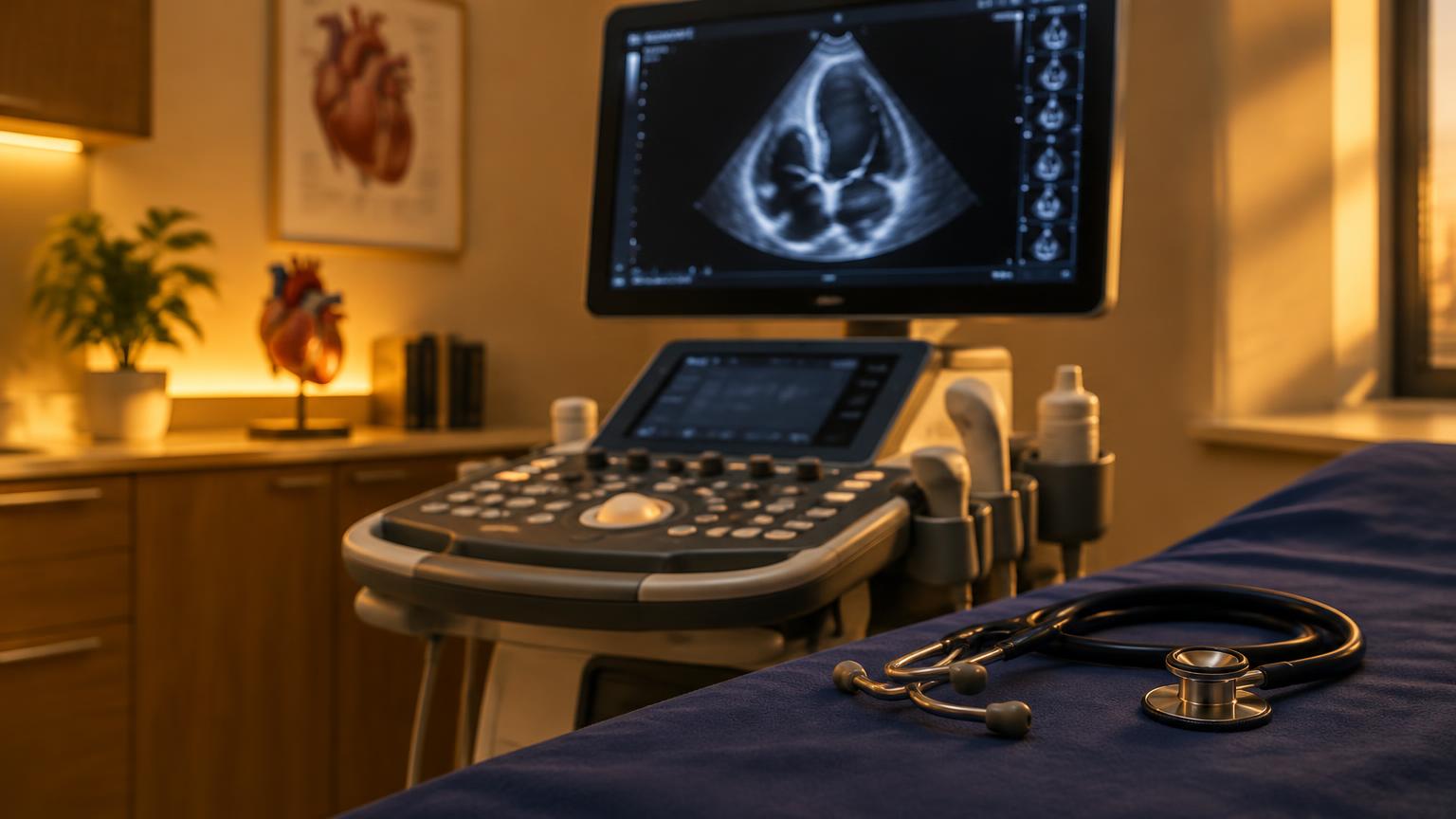
Was tirzepatide tested in heart failure? Yes. The SUMMIT trial enrolled 731 adults with obesity and heart failure with preserved ejection fraction (HFpEF). Over a median of two years, fewer people in the tirzepatide group had cardiovascular death or worsening heart failure: 9.9% compared with 15.3% on placebo.
This original FirstLabs editorial review was updated November 3, 2026. It is educational information, not medical advice, a dosing guide or a recommendation for personal use. FirstLabs catalogue materials are for laboratory research only, not human or veterinary use.
What is HFpEF?
In heart failure with preserved ejection fraction, the heart pumps a normal share of blood with each beat (an ejection fraction of 50% or more) but does not relax and fill normally. Obesity is strongly linked to this form of heart failure, and symptoms include breathlessness, fatigue and reduced exercise capacity.
How SUMMIT was designed
Packer and colleagues randomized 731 patients with HFpEF and a BMI of at least 30 to tirzepatide (364) or placebo (367) for at least 52 weeks. Median follow-up was 104 weeks. The trial had two primary endpoints: a composite of cardiovascular death or a worsening heart-failure event, and change in the Kansas City Cardiomyopathy Questionnaire clinical summary score (KCCQ-CSS), a 0–100 quality-of-life measure.
Results
- Composite endpoint: 9.9% with tirzepatide versus 15.3% with placebo (hazard ratio 0.62).
- Worsening heart-failure events: 8.0% versus 14.2% (hazard ratio 0.54).
- Cardiovascular death: 2.2% versus 1.4%, a difference that was not statistically meaningful given the small number of events.
- Quality of life: KCCQ-CSS improved by 19.5 points versus 12.7 with placebo at 52 weeks.
Adverse events leading to discontinuation, mainly gastrointestinal, occurred in 6.3% of the tirzepatide group versus 1.4% on placebo.
Reading the results carefully
The benefit in the composite endpoint came mainly from fewer worsening heart-failure events. The trial did not show lower cardiovascular death, and it was not powered for that. Results apply to adults with both obesity and HFpEF, not to heart failure with reduced ejection fraction or to people without obesity. The trial was funded by Eli Lilly.
Tirzepatide and heart failure: frequently asked questions
Did tirzepatide reduce heart failure events?
Worsening heart-failure events occurred in 8.0% of the tirzepatide group versus 14.2% on placebo.
Did tirzepatide reduce deaths?
Not significantly. Cardiovascular deaths were few in both groups.
Is a research vial suitable for heart patients?
No. FirstLabs material is for laboratory research only and is not for human use.
Laboratory documentation is a separate question
Evidence about tirzepatide in a clinical study does not establish that a FirstLabs vial is equivalent to the studied formulation. A certificate of analysis describes the submitted sample, not medical suitability or regulatory authorization. HPLC purity does not by itself establish quantity, sterility, endotoxin control or a match to current stock.
For laboratory records, verify exact identity and labelled size, analytical methods, measured quantity, sample identifiers and any available lot-to-stock documentation. A laboratory task ID is not automatically a manufacturing lot. Keep missing reports and adverse results visible rather than borrowing evidence from another size.
Related reading: Tirzepatide sleep apnea trials, stopping versus continuing tirzepatide and tirzepatide clinical evidence. See the Tirzepatide research catalogue for laboratory sizes. The cover is an illustrative cardiology scene.
Read our COA verification checklist, published laboratory reports and Canadian regulation overview for these distinctions.
Primary sources and editorial scope
FirstLabs is a research-material supplier with a commercial interest in the compounds discussed, not a licensed pharmacy or an independent medical authority. Results belong to their original study populations, formulations and endpoints. No personal outcome, treatment protocol or authorization of catalogue products is implied.
RELATED RESEARCH COMPOUNDS
Featured in this article
CONTINUE READING
November 3, 2026
Tesamorelin Research in Canada: Visceral Fat Evidence and Limits
What the 15.2% visceral-fat result measured, why it is not body-weight loss, and how historical prescription authorization differs from research vials.
November 4, 2026
Tesamorelin and Liver Fat: What the HIV NAFLD Trials Found
Two randomized trials in adults with HIV measured liver fat. Here is what changed, what did not, and why it is not a fatty-liver treatment claim.