
BUYING GUIDE · CANADA · STORAGE
Receiving and Storing Research Peptides in Canada: A Lab Checklist
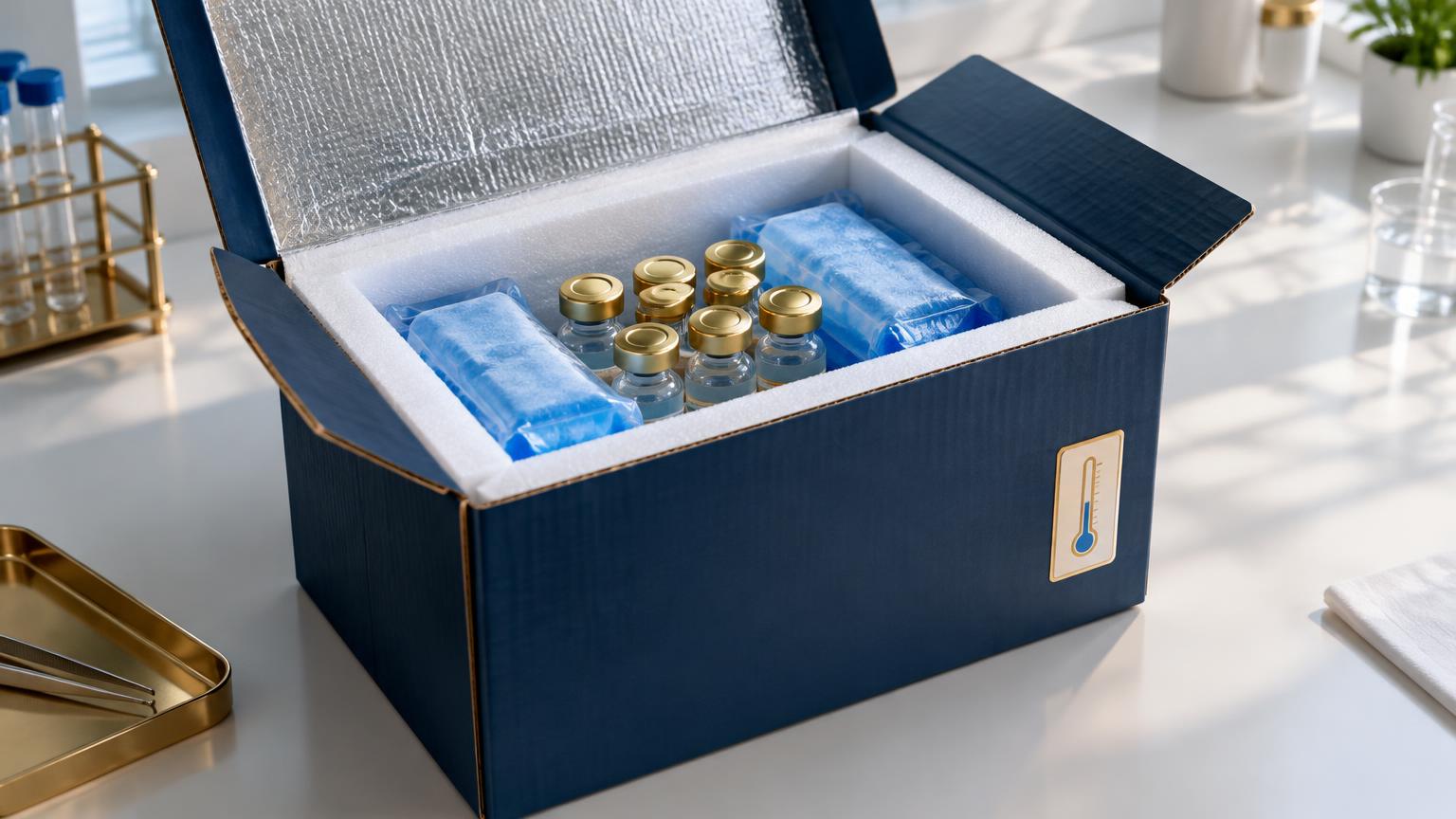
A good result starts when the parcel arrives. This checklist covers what Canadian labs usually check on delivery and how lyophilized research material is commonly stored.
1. Inspect the parcel
Check that vials are intact, caps and seals are undamaged, and the powder sits as a solid cake or loose powder at the bottom of the vial. Photograph anything unusual and contact us with your Order ID.
2. Match labels to records
Note the product, size and any batch information on each label, and compare it with the matching entry on our Lab Reports page. Our batch traceability guide explains how to log this.
3. Store cold, dark and dry
Lyophilized peptides are sensitive to heat, light and moisture. Labs commonly keep sealed vials in a refrigerator or freezer, away from light, and let a vial reach room temperature before opening to limit condensation. See Understanding Lyophilized Peptides for background.
4. Record reconstitution
When a vial is reconstituted for an experiment, label it with the date, solvent and concentration. Our lab reconstitution calculator helps with the concentration math.
Shipping in Canada
Rates, timing and same-day options for parts of Ontario are listed in our Shipping Policy.
Disclaimer: All products are intended strictly for in-vitro laboratory and research use only. Not for human consumption.
RELATED RESEARCH COMPOUNDS
Featured in this article
CONTINUE READING
October 23, 2026
Are Peptides Legal in Canada? What Research Use Actually Means
Health Canada regulates injectable peptides as prescription drugs. Here is what that means for research materials, and what a research-use label does not change.
October 23, 2026
Research Peptide Lab Safety: Handling, PPE and Disposal in Canada
Research peptides belong in a laboratory workflow: PPE, ventilation, documented handling and proper disposal. A practical safety overview for Canadian labs.